



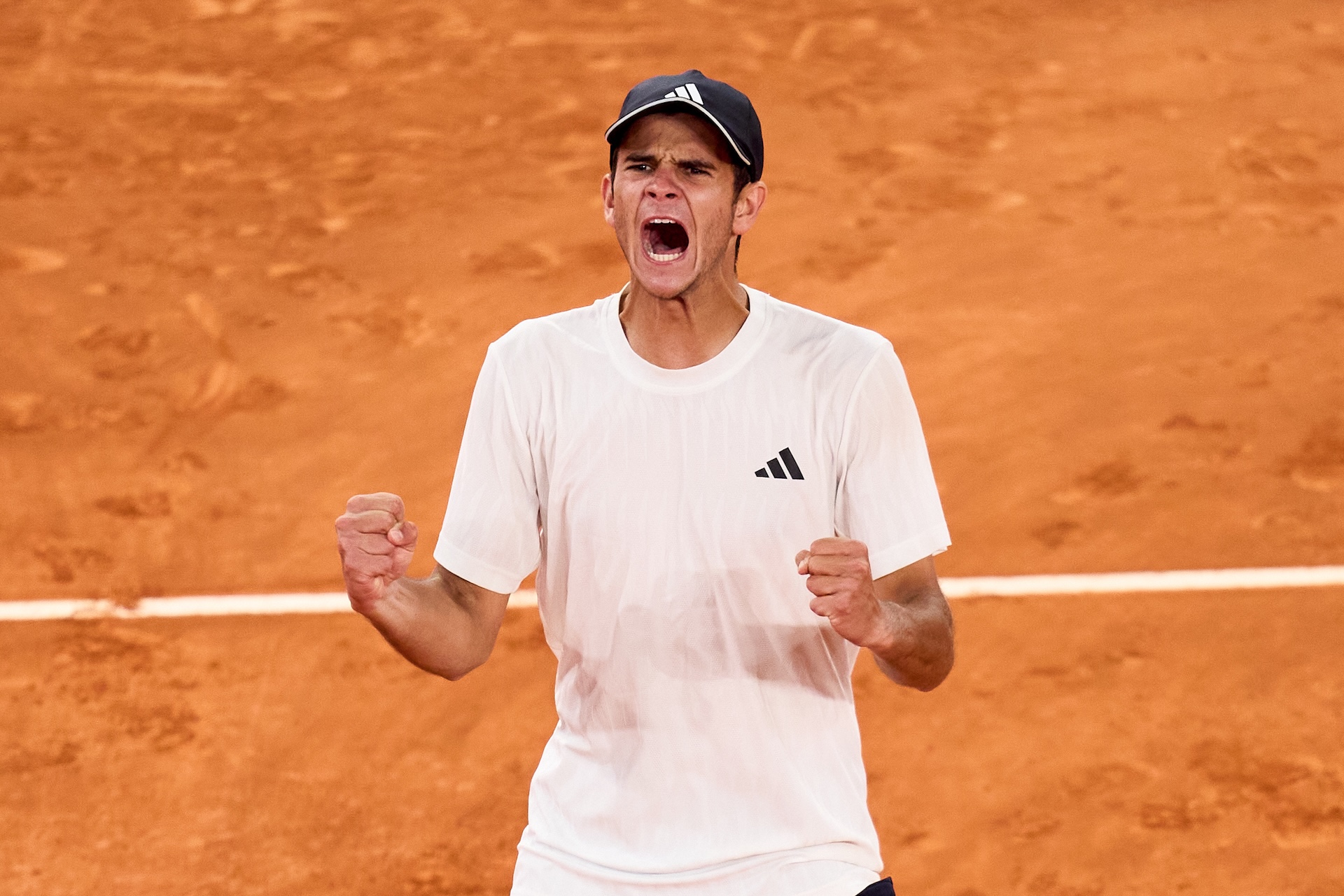
Sometimes lofty praise can carry extra weight purely because of the identity of the person who utters it. When Jannik Sinner, the world number one and one of the biggest stars of today’s tennis, takes the time to opine on an entire generation, it’s worth paying attention. The man from San Candido is not one to hand out compliments lightly, and this Sunday he certainly didn’t hold back.
The Italian was asked in Madrid about Rafa Jódar. The question came with context; the day before, Sinner had been seen practising near the Spaniard’s court and he watched some of his last match. It wasn’t a passing curiosity. Sinner wasn’t there by chance. He was watching. He was ‘listening’.
“He’s a player with tremendous talent”, said the Italian of Jódar. “He strikes the ball very cleanly and with natural power. You can hear it in the sound when he hits the ball, a very good sound comes off the racket”.
The phrase is special because it is part of the private vernacular of tennis players. The sound of the ball, the ease of generating speed, the cleanliness of the impact, the way a player moves. These are details that might go unnoticed from outside, but players pick up on them straight away. Sinner didn’t want to focus on results and spoke instead about on-court feelings.
The Italian didn’t stop there. After waxing lyrical about Jódar, he widened the lens and pointed it at an entire generation: those born in 2006. “They’re from a very interesting year”, he said. “There’s Joao, Jódar, Nicolai, Sakamoto… all very, very good players, and it’s a very strong generation”.
The careers on that list are beginning to take shape. Martín Landaluce, born on 8 January 2006, is already ranked 99 in the world. Rei Sakamoto, Japanese, born on 24 June, holds the 159th spot. Joao Fonseca, Brazilian, born on 21 August, has long been a fixture in international conversations and is already in the world’s top thirty. Nicolai Budkov Kjaer, Norwegian, born on 1 September, is now ranked 140. Rafa Jódar, from Madrid, born on 17 September, has made a splash this week by defeating a top ten player, Álex de Minaur and now Fonseca himself.
Madrid is proving to be one of the first major showcases for this crop. Jódar and Fonseca clashed in the third round, a duel that resonates with the present but also hints of the future. It was one of those matches that, with time, may be remembered as the starting point for an enduring rivalry. Two players born in the same year, following different paths, but both sharing a similar ambition; to find their place in a conversation that until recently seemed reserved for others.
They’re not alone. Budkov Kjaer has also made waves in the Caja Magica. The Norwegian came through qualifying, won his first two matches in the main draw and earned a high-profile meeting with Daniil Medvedev for a place in the last sixteen. Whatever happens against the Russian, he’ll leave Madrid with the highest ranking of his career, further proof that the tournament is not just an experience, for some it is a giant leap.
The 2006 generation is moving quickly, in more ways than one. Fonseca stands out for his competitive maturity and an authority on court that’s rare for his age. Jódar draws attention for that clean ball-striking that Sinner so accurately described. Landaluce is a story of grass-roots Spanish tennis, gradually climbing the ranks. Budkov Kjaer has found a huge platform in Madrid. Sakamoto, junior champion at the 2024 Australian Open, represents another side of that growth, from Asia to the professional circuit.
They’re all part of the same story, though each is writing his chapter at a different pace.
It should be said, Sinner isn’t easily drawn into comparisons. He was asked whether Jódar’s style might resemble his own and chose not to feed flames. “I don’t want to compare him with Joao or anyone else”, he replied. It’s an elegant way of protecting the youngsters from premature pressure. The most valuable compliment isn’t saying someone is like Sinner, but that Sinner has chosen to pay close attention.
The future is not far away. This latest generation already sounds different and the likes of Sinner are all ears.
El italiano fue preguntado en Madrid por Rafa Jódar. La cuestión venía con contexto: el día anterior se le había visto entrenando junto a la pista del español y también observando durante un rato su último partido. No era una curiosidad menor. Sinner no pasó por allí de casualidad. Estaba mirando. Estaba ‘escuchando’.
“Es un jugador con muchísimo talento”, explicó el italiano sobre Jódar. “Golpea la bola de una manera muy limpia, con una potencia muy natural. Se nota por el sonido, cuando impacta la pelota; sale un sonido muy bueno de la raqueta”.
La frase tiene algo especial porque pertenece al idioma íntimo de los tenistas. El sonido de la bola, la facilidad para generar velocidad, la limpieza del impacto, la manera de moverse. Son detalles que desde fuera pueden pasar desapercibidos, pero que los jugadores detectan enseguida. Sinner no quiso centrarse en resultados y habló de sensaciones en pista.
El italiano no se quedó ahí. Al hablar de Jódar, abrió el plano y señaló directamente a una generación: la de los nacidos en 2006. “Están en un año muy interesante”, dijo. “Están Joao, Jódar, Nicolai, Sakamoto… todos son jugadores muy, muy buenos, y es una generación muy fuerte”.
La lista empieza a tener cuerpo propio. Martín Landaluce, nacido el 8 de enero de 2006, ya es número 99 ATP. Rei Sakamoto, japonés, nacido el 24 de junio, ocupa el puesto 159. Joao Fonseca, brasileño, nacido el 21 de agosto, es el nombre más instalado desde hace tiempo en la conversación internacional y dentro del top treinta mundial. Nicolai Budkov Kjaer, noruego, nacido el 1 de septiembre, aparece ya como número 140. Rafa Jódar, madrileño, nacido el 17 de septiembre, ha irrumpido en el torneo ganando a todo un top ten como es Álex de Miñaur.
Madrid está siendo uno de los primeros grandes escaparates de esa hornada. Jódar y Fonseca se han cruzado en tercera ronda, un duelo que suena a presente pero también a futuro. De esos partidos que, vistos con el paso del tiempo, quizá acaben teniendo algo de primera página de una rivalidad mayor. Dos jugadores nacidos en el mismo año, con caminos distintos, pero con una ambición parecida: entrar cuanto antes en una conversación que hasta hace muy poco parecía reservada para otros.
No son los únicos. Budkov Kjaer también ha hecho ruido en la Caja Mágica. El noruego superó la fase previa, ganó sus dos primeros partidos del cuadro final y se ganó una cita de altura ante Daniil Medvedev por un puesto en los octavos de final. Pase lo que pase contra el ruso, ya se marchará de Madrid con el mejor ranking de su carrera, una prueba más de que el torneo no solo está siendo una experiencia, sino un salto.
La generación de 2006 avanza deprisa, pero no de una sola manera. Fonseca impacta por su madurez competitiva y su capacidad para jugar con una autoridad poco común a su edad. Jódar llama la atención por esa bola limpia que Sinner describió casi con precisión de afinador. Landaluce aporta una trayectoria española de fondo, con una progresión cada vez más estable. Budkov Kjaer ha encontrado en Madrid una plataforma enorme. Sakamoto, campeón júnior del Open de Australia en 2024, representa otra vía de crecimiento desde Asia hacia el circuito profesional.
Todos forman parte de un mismo mapa, aunque cada uno esté escribiendo su historia a distinta velocidad.
Todo sea dicho, Sinner no cae en la comparación fácil. Le preguntaron si el estilo de Jódar podía parecerse al suyo y prefirió no alimentar etiquetas. “No quiero compararlo con Joao ni con nadie más”, vino a decir en otra respuesta. Es una forma elegante de proteger a los jóvenes de una carga prematura. El elogio más valioso no es decir que alguien se parece a Sinner, sino que Sinner haya decidido mirar con atención.
Porque eso también dice mucho del momento. La generación de 2006 ya no vive solo en los cuadros júnior, en las listas de promesas o en los informes de futuro. Ya pisa escenarios grandes. Ya gana partidos de peso. Ya se mide con jugadores establecidos. Ya obliga a los mejores del mundo a girar la cabeza.
Madrid, siempre tan propenso a detectar talentos antes de que terminen de explotar, está viendo asomar a varios al mismo tiempo. Y Sinner, que no suele gastar palabras de más, dejó una pista clara: ahí hay algo.
No es futuro lejano. Es una generación que ya suena distinto. Y algunos, como Sinner, ya la están escuchando.
